Shortness of Breath Explained: Why Dyspnea Is a Nervous System Signal

Shortness of breath that occurs despite normal oxygen levels and clear lung tests is one of the most frightening and misunderstood bodily sensations. Often described as air hunger, chest tightness, or an inability to take a satisfying breath, this experience medically termed dyspnea frequently reflects nervous system dysregulation rather than lung disease. Understanding how breathing sensation is regulated by the brain, autonomic nervous system, and circulation clarifies why symptoms persist and why safety-based regulation is the true solution.

Written by Scott Pringle, Founder of the Integrated Health Foundation
Table of Contents
Graphic asking whether air hunger can occur despite normal medical tests.

Shortness of breath can feel alarming, especially when medical testing shows that lung structure and oxygen saturation are normal. Many individuals describe a constant sense of air hunger, chest tightness, or the inability to take a full breath despite trying harder.

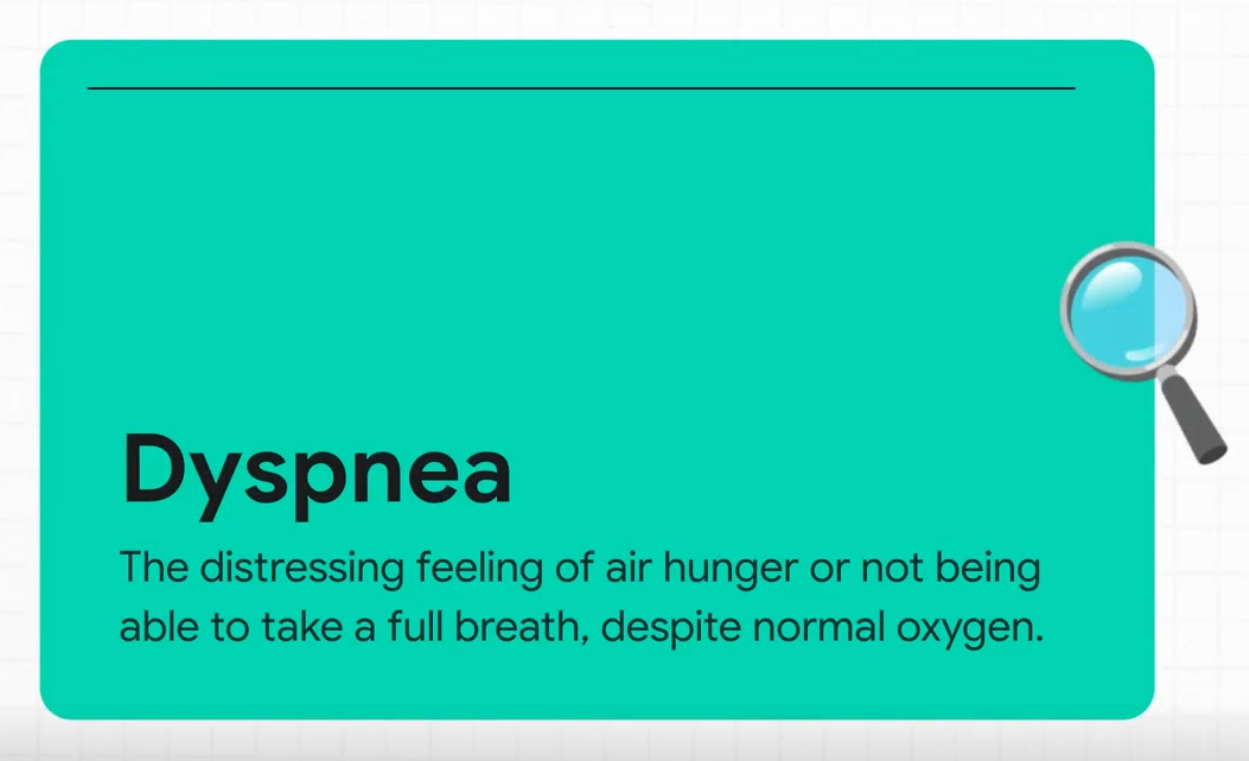
Definition card explaining dyspnea as air hunger despite normal oxygen levels.

This sensation has a medical name: dyspnea. In a large subset of cases, the origin is not pulmonary but neurological.

The evidence points toward a communication issue within the nervous system rather than a failure of the lungs themselves.

Definition card explaining dyspnea as air hunger despite normal oxygen levels.
1

The Air Hunger Mystery:
Clue #1: A False Alarm

The Brainstem and Carbon Dioxide Sensitivity

Breathing is regulated automatically by the brainstem, which continuously monitors carbon dioxide (CO₂) levels in the blood. CO₂ not oxygen is the primary driver of breathing. In a regulated system, small fluctuations in CO₂ are tolerated without conscious awareness. The brainstem adjusts breathing seamlessly.

Diagram stating that the brainstem regulates breathing by monitoring carbon dioxide levels.

However, under conditions of chronic stress or autonomic dysfunction, this regulatory center becomes hypersensitive. Normal CO₂ changes are misinterpreted as emergencies. This phenomenon has been documented in panic disorder and dysautonomia, where CO₂ sensitivity is abnormally elevated (Pattinson KTS et al., 2008  PubMed).

Comparison chart showing normal versus dysregulated responses to carbon dioxide.

When the brainstem sounds a false alarm, it triggers a fight-or-flight response. Breathing rate increases, leading to over-breathing. Paradoxically, this lowers CO₂ too much, causing cerebral vasoconstriction, dizziness, and an intensified sensation of air hunger. These frightening sensations reinforce anxiety, confirming the brain’s belief that a threat is present, and the cycle repeats (Ley R, 1988 PubMed).

Diagram illustrating the hyperventilation loop driven by hypersensitive carbon dioxide sensing, over-breathing, vessel constriction, dizziness, and anxiety.
2

Clue #2 Stressed Body :
Posture & Blood Flow

Breathing Mechanics and Chest Breathing

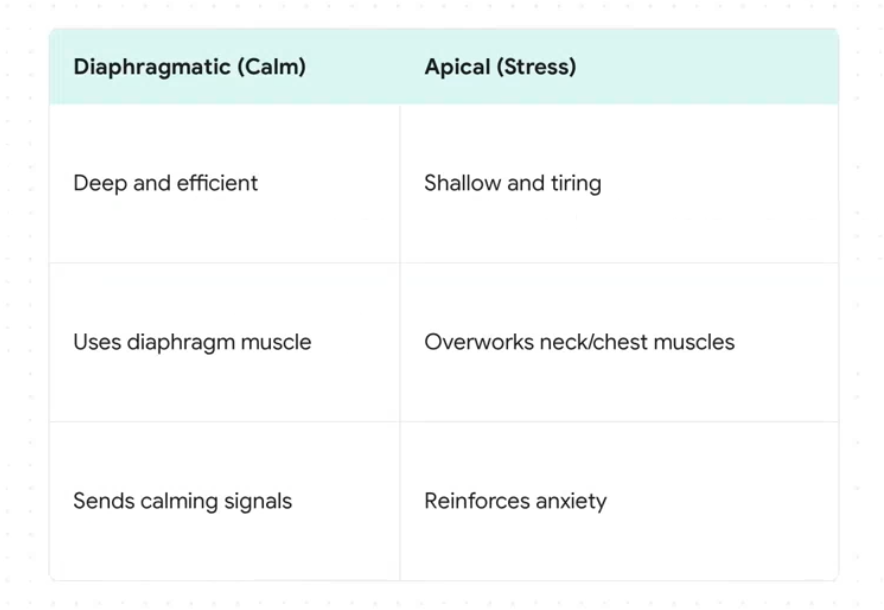
Beyond brainstem signaling, physical breathing patterns play a major role. In calm states, breathing is driven primarily by the diaphragm. This pattern is efficient, low effort, and sends calming feedback to the nervous system.

Under chronic stress, breathing often shifts upward into the chest. Chest breathing is shallow, inefficient, and heavily recruits accessory muscles in the neck and upper chest. This pattern increases fatigue and creates the sensation of chest tightness. It also reinforces sympathetic activation by continuously signaling distress to the brain (Courtney, 2010 PubMed).

Table comparing calm diaphragmatic breathing with stress-driven chest breathing.

When the diaphragm is underutilized, its movement becomes restricted. This limits lung expansion and weakens vagal afferent signaling. Because the vagus nerve passes through the diaphragm, reduced diaphragmatic motion diminishes parasympathetic input, keeping the nervous system in a heightened state of alert (Jerath et al., 2006 PubMed).

List outlining negative effects of chronic chest breathing.

Circulatory Contributions and Orthostatic Stress

In individuals with autonomic conditions such as postural orthostatic tachycardia syndrome (POTS), circulatory factors further compound dyspnea. Upon standing, blood vessels may fail to constrict adequately, leading to blood pooling in the lower extremities. As a result, less blood returns to the heart and brain.

Explanation of blood pooling in the lower body during standing in POTS.

The brain interprets reduced cerebral perfusion as a threat. In response, it increases respiratory drive in an attempt to deliver more oxygen. This creates a mismatch: breathing effort increases, but the sensation of relief does not occur because the underlying issue is circulatory, not pulmonary (Raj SR, 2013 PubMed).

This explains why individuals may feel short of breath even at rest or during mild activity, despite normal lung function.

Statement explaining that increased breathing effort may feel ineffective when circulation is impaired.
3

The Mastermind :
Communication Breakdown

The Common Thread: Communication Failure

When all clues are considered together hypersensitive CO₂ sensors, stress-driven chest breathing, and impaired circulation the unifying factor becomes clear. Dyspnea in these cases does not reflect lung failure. It reflects a system-wide communication failure.

The autonomic nervous system is operating in a state of persistent threat detection. Normal bodily signals are amplified and misinterpreted as danger.

Bullet list summarizing nervous system, breathing, and circulatory contributors to dyspnea.

The limbic system labels these sensations as alarming, increasing vigilance and attention. The body adapts with stress-based breathing patterns that further reinforce the loop (Thayer & Lane, 2000 PubMed).At its core, the nervous system no longer perceives safety.

Statement describing how the nervous system and emotional brain amplify danger signals.
4

Natural Rhythm :
From Fear to Safety

Why Forcing the Breath Worsens Symptoms

Attempts to consciously control breathing often intensify symptoms. Effortful breathing adds another layer of stress to an already overloaded system. Studies of anxiety-related dyspnea consistently show that reassurance and regulation are more effective than forced breathing strategies (Meuret et al., 2010 PubMed).

When nervous system threat perception decreases, breathing naturally re-synchronizes. It becomes slower, deeper, and more efficient without conscious effort.

Text stating that reducing threat perception allows the nervous system to stand down.

Reframing Shortness of Breath

 When breathing feels out of control, it is not because the body has forgotten how to breathe. It is because the nervous system has forgotten that it is safe.

 The path back to comfortable breathing lies not in greater control, but in restoring regulation, predictability, and safety within the system.

Dyspnea becomes a signal an indicator of autonomic overload rather than pulmonary failure. Understanding this reframes fear into information and opens a path toward recovery through nervous system regulation.

Quote stating that breathing difficulty reflects a nervous system that does not feel safe.

Do You Have Dysautonomia?

Take our quick and comprehensive symptom assessment to find out if your symptoms align with dysautonomia and receive personalized insights.

Frequently Asked Questions
Can shortness of breath occur with normal oxygen levels?

Yes. Dyspnea is often driven by CO₂ sensitivity and nervous system signaling rather than oxygen deficiency.

Anxiety activates the sympathetic nervous system, increasing respiratory drive and amplifying air hunger sensations.

Over-breathing lowers CO₂ excessively, triggering vasoconstriction and intensifying dyspnea.

Chest breathing is inefficient, increases muscle fatigue, and reinforces stress signals to the brain.

Reduced blood return to the brain triggers increased respiratory drive despite normal lung function.

Often no. Forcing breathing can increase anxiety and worsen symptoms.

Yes. When autonomic balance is restored, breathing patterns normalize naturally.

References

Read More Articles

joint pain explained

Joint Pain Explained: When Inflammation Becomes a Systemic Signal

Home Symptoms Explainer Joint Pain The Systemic Roots of Joint Pain Joint pain is not merely a mechanical issue of cartilage wearing down, it is often a systemic signal of deeper biological stress. Emerging research on systemic inflammation and joint pain reveals the interconnected roles of the gut, mitochondria, and
Read More »

Explaining Palpitations

Heart palpitations can feel sudden and alarming, yet they usually arise from the body’s regulation systems, not from heart disease. This article explores how stress, posture, breathing, hydration, minerals, and gut health affect rhythm and reveal the body working to stay balanced.
Read More »
Temperature Sensitivity

Temperature Sensitivity

Many people struggle with feeling too hot or too cold when others feel fine. This article explores how the autonomic nervous system, cellular energy, and inflammation control internal temperature and why these systems can fall out of balance.

Read More »

Why Your Hands Get Freezing Cold

Cold hands and feet often reflect more than poor circulation, they’re signals from the nervous system. This article explains how vasoconstriction, stress, and autonomic imbalance redirect blood flow and what that reveals about the body’s intelligent protective mechanisms.

Read More »

Share This Article

Subscribe
Notify of
guest
0 Comments
Oldest
Newest Most Voted
Inline Feedbacks
View all comments