Why Your Hands Get Freezing Cold

Cold hands and feet are among the most common circulation-related complaints, but they rarely stem from temperature alone. Instead, they reflect how the autonomic nervous system controls blood flow through a process called vasoconstriction, often as part of the stress or “fight-or-flight” response. 

Understanding how this system works reveals that cold extremities may be less a defect in circulation and more an intelligent physiological message from the body.

Written by Scott Pringle, Founder of the Integrated Health Foundation
Table of Contents

You ever just have freezing cold hands or feet, even when it’s not actually that cold out?
It’s super common and super frustrating. But what if it’s not just some random thing the body does?
What if it’s actually a very specific message the body is trying to send?

You might be sitting inside, maybe even cozy under a blanket, and your hands feel like they could double as ice packs.
It’s so uncomfortable and, honestly, a little bit strange.

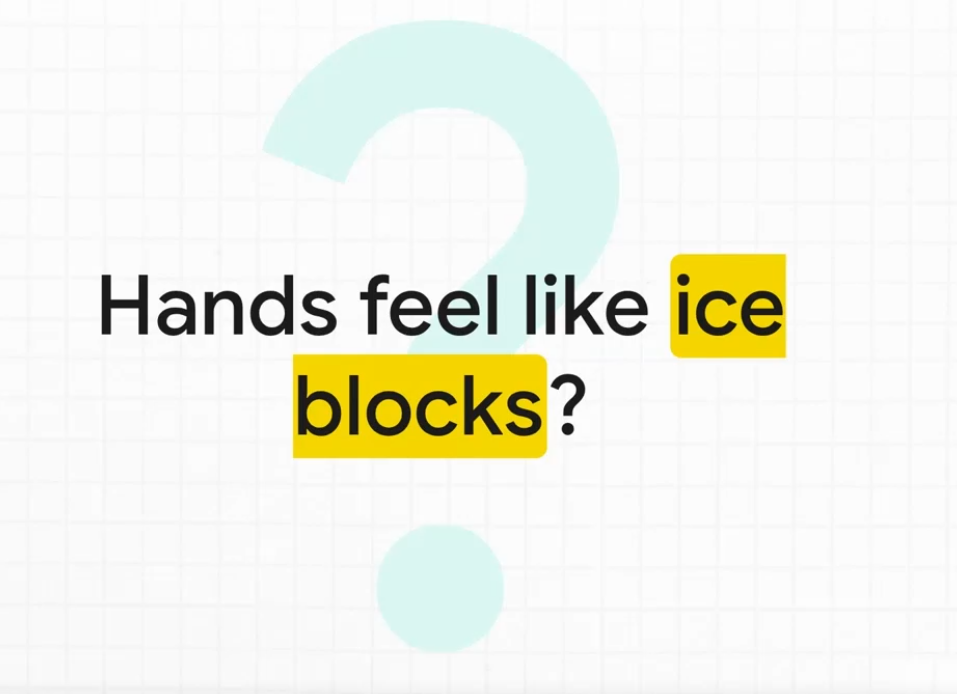
Graphic asking, “Hands feel like ice blocks?”

Most people just shrug it off as “bad circulation,” but that’s only scratching the surface.
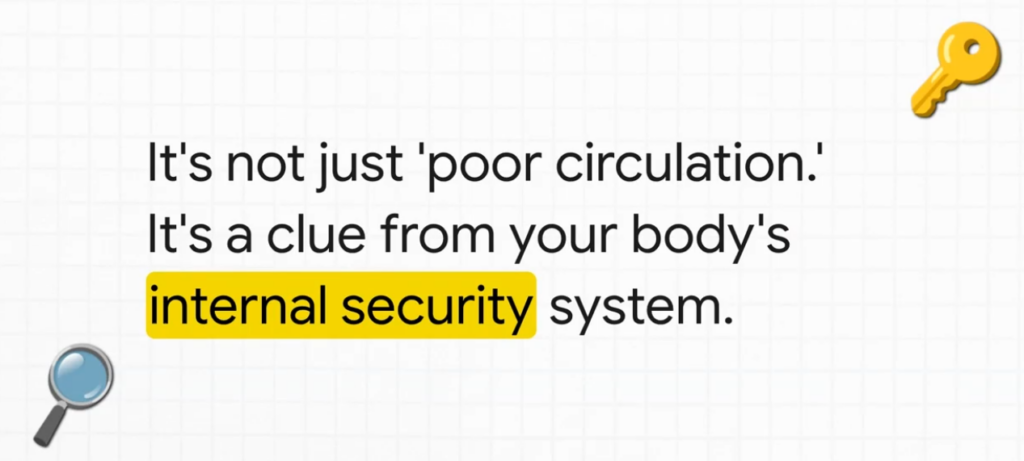
The real reason has a lot less to do with the temperature of the room and a whole lot more to do with the body’s own internal security system.

Text graphic stating that cold hands are a clue from the body’s internal security system.
1

Beyond Temperature:
It's your blood flow

The Inside Job: What’s Really Happening
That feeling of cold in the hands and feet is a direct result of less blood reaching them.
There’s a specific biological process behind it called vasoconstriction.

Graphic defining vasoconstriction as narrowing of blood vessels that reduces blood flow to the extremities.

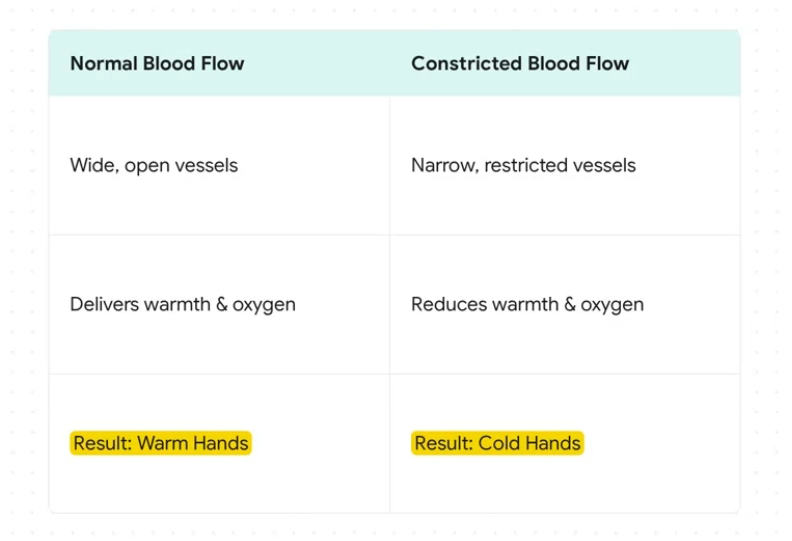
With normal blood flow, vessels are wide open, a superhighway for warmth and oxygen,
but when those vessels constrict, that warmth can’t get through, and the result is cold, heavy hands and feet (Charkoudian, 2010 PubMed).

The Master Controller: Your Autonomic Nervous System
So what tells those vessels to clamp down like that in the first place?

Table comparing warm hands from wide vessels vs cold hands from narrowed vessels.
2

Overprotective System:
The Master Controller

The answer lies with the master controller of nearly all the body’s automatic functions,
the autonomic nervous system (ANS).
It’s the one calling the shots, and sometimes, it can get a little overprotective.

Text graphic stating that the autonomic nervous system manages heart rate, digestion, and blood flow automatically.

The ANS runs quietly in the background 24/7, managing heart rate, breathing, digestion, and blood flow, all without conscious effort.
It has two primary settings:
Rest and Digest (parasympathetic activity) and Fight or Flight (sympathetic activity).

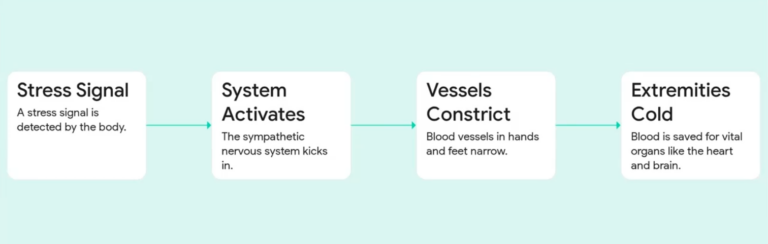
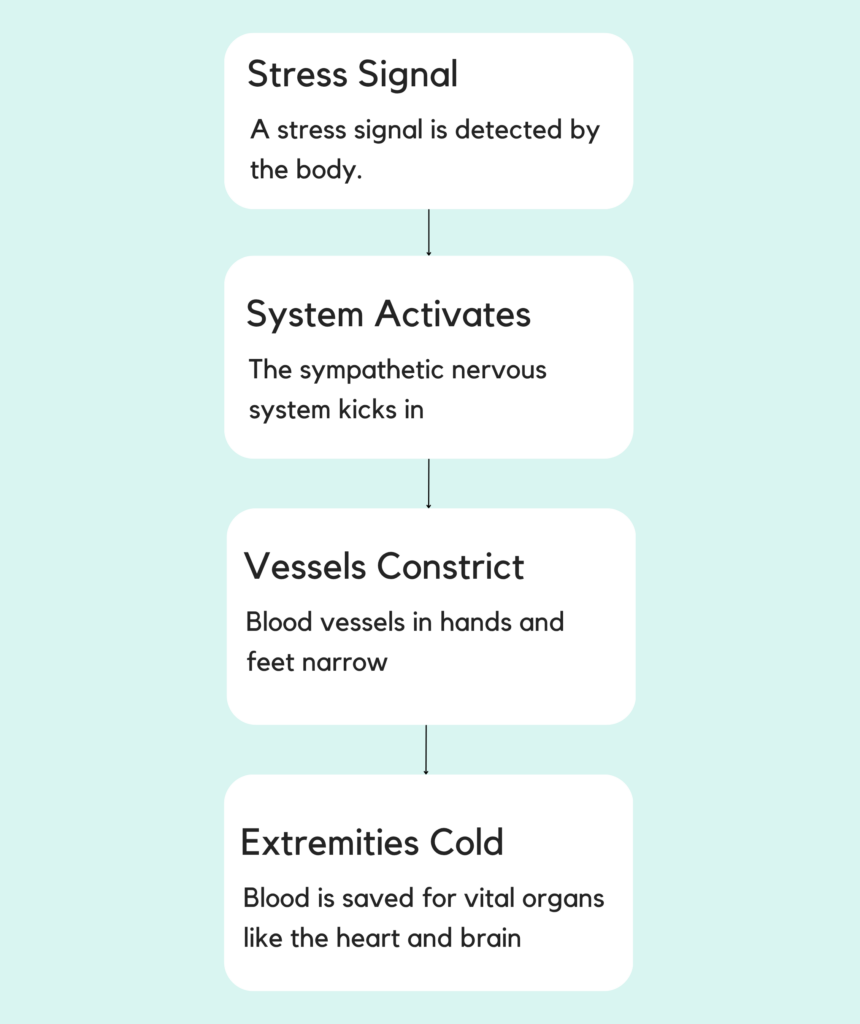
When the body thinks there’s a threat, and that can be any form of stress, that “fight or flight” switch gets flipped on.
One of the first things it does is tighten the blood vessels in the hands and feet.
It’s a brilliant survival move. It pulls precious blood away from the limbs to protect vital organs, the heart and brain.

Flowchart showing “Stress Signal,” “System Activates,” “Vessels Constrict,” and “Extremities Cold.”

Now, in a perfectly regulated system, the alarm turns off as soon as the danger is gone.
But for many people, especially anyone experiencing nervous system dysregulation or dysautonomia, that alarm can get stuck in the “on” position.
The body starts acting like it’s in a constant, low-grade emergency, even when completely safe.

Graphic stating that with dysautonomia, the alarm system gets “stuck on,” behaving as if in constant survival mode.
3

Interconnected System:
Keeping the Alarm On

And it’s rarely just one thing keeping that alarm on.
The body is incredibly complex and interconnected, and several factors can contribute to this state of high alert. 

List of contributing factors including metabolic slumps, chronic stress, gut and immune issues, physical tension, and venous pooling.
  • Low metabolism: cells aren’t producing enough heat (Silva, 2006 PubMed)
  • Chronic stress: adrenaline keeps pumping constantly (McEwen, 2007 PubMed)
  • Gut or immune inflammation: interferes with blood vessel regulation (Tracey, 2009 PubMed)
  • Physical tension or posture issues: especially in the neck, can disrupt nerve communication (Zebrowska et al., 2020 PubMed)

It’s all connected.

4

Message of Protection:
Reframing the Symptom

A Smarter Story: The Body Isn’t Broken
This can sound discouraging, but here’s the truth:

Text graphic asking, “What’s the common thread tying all of this together?”

The body isn’t broken.
It’s not failing.
Those cold hands are the result of a smart, ancient survival strategy.
The body is doing exactly what it was designed to do, protecting vital systems.

Graphic with the quote: “Cold hands are your body’s way of saying it’s protecting you.”

When it senses danger, it reroutes blood and energy to the core,
to the heart and brain, to get through what it perceives as a crisis.
That cold sensation is a message, the body saying, “I’m in protection mode right now.”
And that means warmth isn’t something to force, it returns naturally when the system finally feels safe enough to relax.

5

How Warmth Returns: Path Back to Balance

The Way Back to Warmth
If the problem is an overactive alarm system, how can it be convinced that everything is safe?

Text graphic saying the solution is not forcing warmth but restoring safety to the nervous system.

The answer isn’t thicker gloves or turning up the heat.
The lasting change comes from sending consistent signals of safety back to the nervous system, teaching it that the threat is over, and it’s okay to power down (Thayer & Lane, 2000 PubMed).
When the brain and nervous system feel safe, they willingly open those vessels again.
Warm blood returns to the hands and feet.

So maybe cold hands aren’t an annoyance to fix,
but a message to understand, a quiet reminder not to chase warmth from the outside, but to create safety from the inside out.

Graphic asking, “What if warmth returns by first creating internal safety?”

Do you Have Dysautonomia?

Take our quick and comprehensive symptom assessment to find out if your symptoms align with dysautonomia and receive personalized insights.

Frequently Asked Questions
Why do my hands and feet get cold even when I’m not cold?

Cold hands and feet are usually caused by vasoconstriction, a tightening of blood vessels that reduces blood flow to the skin. This is often triggered by the sympathetic nervous system — the body’s “fight or flight” branch — as part of a normal stress or protection response (Charkoudian, 2010 PubMed).

The autonomic nervous system (ANS) controls blood vessel tone automatically. When the sympathetic branch is active, it constricts peripheral vessels to preserve blood for the brain and heart. When the parasympathetic branch is dominant, vessels relax and blood flow returns to the skin and extremities (Benarroch, 2021 PubMed).

Yes. Emotional or physical stress increases the release of adrenaline and cortisol, hormones that activate the sympathetic nervous system. This triggers vasoconstriction in the hands and feet, reducing warmth as the body prepares to handle perceived threat (McEwen, 2007 PubMed).

Dysautonomia is a term for conditions in which the autonomic nervous system doesn’t regulate normally. It can cause poor blood vessel control, low blood pressure, dizziness, and cold extremities. In dysautonomia, the body may remain stuck in a “fight or flight” state even when safe (Raj & Robertson, 2007 PubMed).

Yes. When metabolism is low, cells produce less heat, leading to cooler extremities. Factors like thyroid imbalance, nutritional deficiency, or mitochondrial inefficiency can all reduce metabolic heat production (Silva, 2006 PubMed).

Inflammation, whether from the gut or immune system, can disrupt vascular and autonomic signaling. Cytokines released during inflammation interfere with normal vessel relaxation, leading to increased sympathetic tone and cooler extremities (Tracey, 2009 PubMed).

The goal is to send consistent signals of safety to the nervous system — through adequate sleep, balanced breathing, restorative movement, social connection, and stress regulation practices. Over time, these cues shift the body from “protection mode” back toward regulation, allowing normal warmth to return (Thayer & Lane, 2000 PubMed).

Read More Articles

joint pain explained

Joint Pain Explained: When Inflammation Becomes a Systemic Signal

Home Symptoms Explainer Joint Pain The Systemic Roots of Joint Pain Joint pain is not merely a mechanical issue of cartilage wearing down, it is often a systemic signal of deeper biological stress. Emerging research on systemic inflammation and joint pain reveals the interconnected roles of the gut, mitochondria, and
Read More »

Explaining Palpitations

Heart palpitations can feel sudden and alarming, yet they usually arise from the body’s regulation systems, not from heart disease. This article explores how stress, posture, breathing, hydration, minerals, and gut health affect rhythm and reveal the body working to stay balanced.
Read More »
Temperature Sensitivity

Temperature Sensitivity

Many people struggle with feeling too hot or too cold when others feel fine. This article explores how the autonomic nervous system, cellular energy, and inflammation control internal temperature and why these systems can fall out of balance.
Read More »

The Biology of Hopelessness

Hopelessness is not a personal failure but a biological state driven by chronic stress and nervous system overload. When survival mode dominates, the amygdala, stress hormones, and energy systems shift, suppressing motivation and perspective. Understanding this physiology creates a clear path toward restoration.

Read More »

Share This Article

Subscribe
Notify of
guest
0 Comments
Oldest
Newest Most Voted
Inline Feedbacks
View all comments