
Is your POTS, MCAS, or Fibromyalgia caused by your nervous system? In most cases , yes. Every condition under the dysautonomia umbrella shares a common upstream driver: autonomic nervous system dysregulation driven by HPA-axis dysfunction, neuroinflammation, and limbic sensitization.
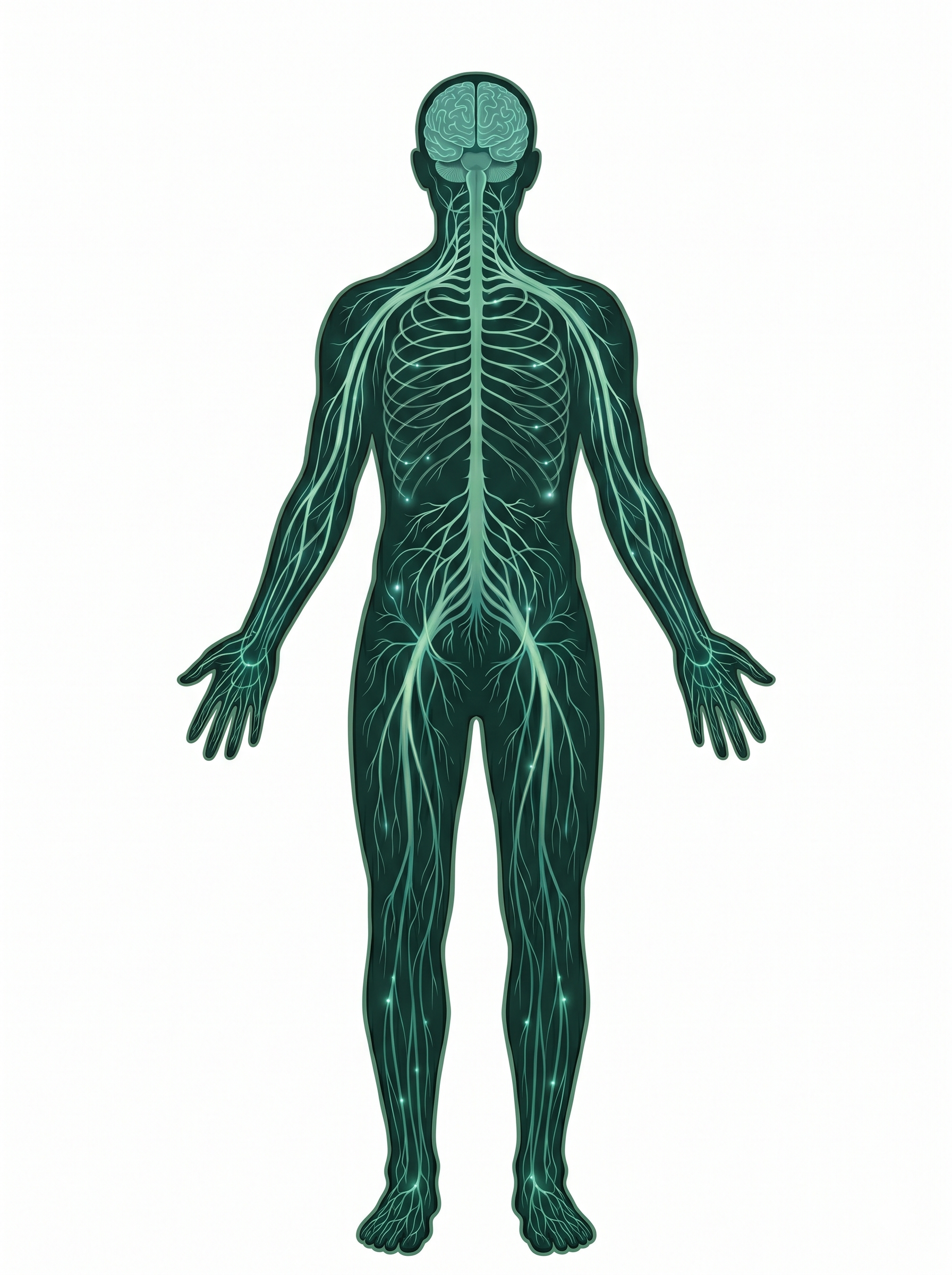
Dysautonomia is an umbrella term for autonomic nervous system disorders including POTS, NCS, MSA, and PAF — affecting an estimated 70 million people worldwide. MCAS, Fibromyalgia, ME/CFS, and Long Covid frequently co-occur due to shared HPA-axis dysregulation and neuroinflammation.
The "dysautonomia umbrella" is a general term used to describe a broad spectrum of medical disorders caused by a malfunction of the autonomic nervous system (ANS). Because the ANS controls "automatic" body functions like heart rate, blood pressure, digestion, and temperature regulation, dysautonomia can manifest in various ways across multiple organ systems.
It covers a diverse range of conditions where the autonomic nervous system fails to function properly, with Postural Orthostatic Tachycardia Syndrome (POTS), Neurocardiogenic Syncope (NCS), and Orthostatic Hypotension (OH) being among the most frequently diagnosed. It also includes more complex or progressive disorders such as Multiple System Atrophy (MSA), Pure Autonomic Failure (PAF), and Inappropriate Sinus Tachycardia (IST). Rarer forms like Autoimmune Autonomic Ganglionopathy (AAG) and the genetic disorder Familial Dysautonomia (FD) sit alongside localized issues like Baroreflex Failure and Autonomic Dysreflexia. Additionally, the umbrella accounts for autonomic damage caused by underlying diseases, such as Diabetic Autonomic Neuropathy or complications stemming from Long COVID, Lupus, and Ehlers-Danlos Syndrome.
The autonomic nervous system operates entirely below conscious awareness. When it loses its ability to self-regulate, through infection, chronic stress, trauma, or gut dysbiosis, the result is a cascade of symptoms that affect every organ system simultaneously. This is why people with dysautonomia commonly receive multiple diagnoses before the underlying pattern is identified.
See our full nervous system recovery roadmap →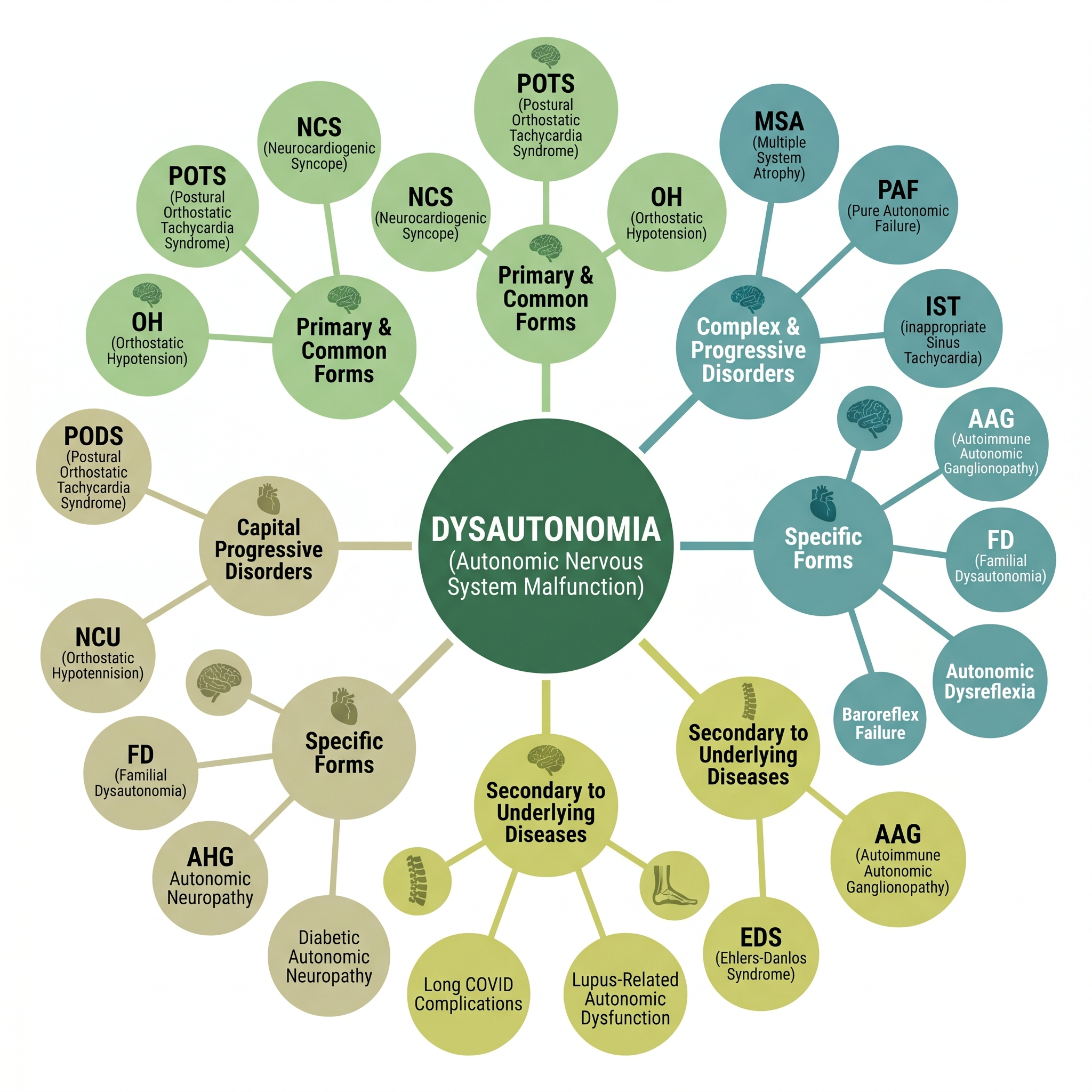
Each condition below shares upstream autonomic, HPA-axis, and neuroinflammatory drivers. Click any condition to understand its mechanism and its connection to the nervous system root cause.
Heart rate increases 30+ bpm within 10 minutes of standing. The autonomic nervous system fails to redistribute blood flow when moving from lying to upright , causing dizziness, palpitations, brain fog, and fatigue.
Mast cells release excess histamine and inflammatory mediators in response to normal triggers , foods, scents, stress, temperature. The limbic system and autonomic nervous system directly regulate mast cell behaviour, making nervous system dysregulation a primary driver.
Widespread musculoskeletal pain caused by central sensitization , the brain's threat-detection loop becomes fixed in a pain-amplification state. Autonomic dysregulation and reduced heart rate variability are consistent findings in Fibromyalgia research.
Post-viral autonomic dysfunction , including POTS , is one of the most common Long Covid presentations. Mechanisms include vagal nerve inflammation, neuroinflammation, and HPA-axis disruption triggered by the acute viral response.
Profound fatigue not relieved by rest, post-exertional malaise, and cognitive impairment. Autonomic dysfunction, mitochondrial impairment, and HPA-axis abnormalities are consistently identified across ME/CFS research.
Autoimmune attack on the thyroid gland, frequently co-occurring with dysautonomia. Chronic HPA-axis dysregulation disrupts cortisol rhythms, increasing immune permissiveness that drives thyroid autoimmunity.
Systemic autoimmune disease affecting multiple organs. Autonomic dysfunction is documented in lupus, with sympathetic overactivation and reduced vagal tone correlating with disease activity and flare frequency.
Post-treatment Lyme frequently produces persistent autonomic dysfunction, cognitive impairment, and fatigue mirroring dysautonomia , driven by neuroinflammation, limbic sensitization, and HPA-axis disruption from the initial infection.
POTS, MCAS, Fibromyalgia, ME/CFS, and Long Covid share core symptoms — brain fog, fatigue, sleep disturbance, sensory sensitivity, and post-exertional worsening — because all five share autonomic nervous system dysregulation as an upstream root driver.
There is a significant overlap between Postural Orthostatic Tachycardia Syndrome (POTS), Mast Cell Activation Syndrome (MCAS), Fibromyalgia (FM), Myalgic Encephalomyelitis/Chronic Fatigue Syndrome (ME/CFS), and Long Covid. These conditions often share a common core of "invisible" symptoms that make them difficult to differentiate. The matrix below maps key symptoms to each condition, helping clarify your diagnosis and showing why treating the shared nervous system driver improves all of them at once.

Many chronic conditions share overlapping symptoms. This chart highlights common patterns.
POTS, MCAS, and Fibromyalgia co-occur because they share the same upstream mechanism: HPA-axis dysregulation creating a cascade of autonomic, immune, and hormonal dysfunction simultaneously.
These conditions co-occur because they share a common upstream driver: nervous system dysregulation. When the autonomic nervous system becomes stuck in sympathetic dominance, it dysregulates every downstream system , immune, cardiovascular, hormonal, and digestive , simultaneously.
This is why treating each condition in isolation rarely produces lasting results. The IHF protocol targets the shared nervous system root cause , producing improvements across all co-occurring conditions at once.
The master stress-immune axis. When dysregulated, it simultaneously impairs autonomic regulation, immune function, and hormonal balance , creating the conditions for POTS, MCAS, and autoimmune co-occurrence.
Chronic low-grade brain inflammation impairs autonomic nerve signalling, sensitizes the limbic system, and disrupts the gut-brain axis , a shared feature of POTS, ME/CFS, Long Covid, and Fibromyalgia.
Low vagal tone impairs autonomic regulation of heart rate, gut motility, immune function, and the stress response. Restoring vagal tone is a central target of IHF's recovery protocol.
A sensitized limbic system perpetuates chronic threat states that sustain sympathetic dominance, neuroinflammation, and mast cell reactivity , even in the absence of real danger. Central to MCAS, Fibromyalgia, and chronic pain.
POTS is an autonomic nervous system disorder; MCAS is an immune disorder. POTS causes abnormal heart rate on standing; MCAS causes inappropriate mast cell activation. They co-occur in up to 66% of cases due to shared HPA-axis and limbic sensitization drivers.
The main difference between Postural Orthostatic Tachycardia Syndrome (POTS) and Mast Cell Activation Syndrome (MCAS) lies in which body system is malfunctioning. They are mechanistically distinct but share upstream drivers and co-occur in up to 66% of cases. Both respond to the same nervous system root cause protocol.
Clinically grounded answers for clients navigating complex, overlapping diagnoses.

Integrated Health Foundation does not treat conditions in isolation. We treat the shared root cause , a dysregulated nervous system. Our 3-phase protocol addresses the HPA-axis, neuroinflammation, vagal tone, and limbic sensitization driving every condition on this page.
86% of clients report 50% or greater improvement by week 12.
Gut-brain axis repair, anti-inflammatory nutrition, and targeted nutrient repletion to lower neuroinflammation.
Circadian support, HRV-based pacing, vagal tone strengthening, and graded movement to restore autonomic resilience.
Structured retraining to rewire the threat-detection loop, reduce central sensitization, and restore parasympathetic dominance.
Join the IHF waitlist to access our 3-phase nervous system recovery protocol , designed specifically for POTS, MCAS, Fibromyalgia, and the full dysautonomia umbrella.
Limited spots · No spam · Waitlist updates only
